Effective management of pests and diseases in chickens is crucial for maintaining a healthy flock. Regular monitoring and a clean environment are essential to prevent infestations and infections.
Common Pests and Control Methods
Major Pests
Pest Type Description Control Methods
Mites Small parasites that feed on skin and feathers Use approved insecticides; maintain cleanliness
Lice Wingless insects that can cause irritation Apply insecticides; regular coop cleaning
Flies Can spread diseases and create nuisances Implement sanitation measures; use traps and insecticides
Litter Beetles Feed on poultry waste and can spread diseases Clean litter regularly; use insecticides
Control Strategies
Regular Monitoring: Check for signs of pests and diseases frequently.
Sanitation: Keep the coop clean to reduce pest breeding grounds.
Insecticides: Use appropriate products for specific pests, following safety guidelines.
Integrated Pest Management: Combine biological, mechanical, and chemical
methods for effective control.
Common Diseases and Prevention
Major Diseases
Disease Symptoms Prevention Methods
Marek's Disease Paralysis, tumors, weight loss Vaccination at hatch; clean environment
Coccidiosis Diarrhea, lethargy, pale combs Use medicated feed; keep coop dry
Salmonella Gastrointestinal issues, fever Maintain hygiene; wash hands after handling
Prevention Strategies
Vaccination: Ensure chicks are vaccinated against common diseases.
Hygiene: Regularly clean the coop and equipment to prevent disease spread.
Veterinary Care: Consult a veterinarian for health checks and vaccinations.
Maintaining a proactive approach to pest and disease control will help ensure the health and productivity of your chicken flock.
I personally use
permethrin for mite control. Years ago, I dealt with a severe infestation in my coops. I started by giving the coops a thorough cleaning, then sprayed permethrin into every nook and cranny once a week for a month. This routine not only eliminated the mites as they hatched, but also got rid of any flies—a nice bonus! One major advantage of using permethrin is that there’s no egg withdrawal period, so you don’t have to worry about discarding eggs during treatment.
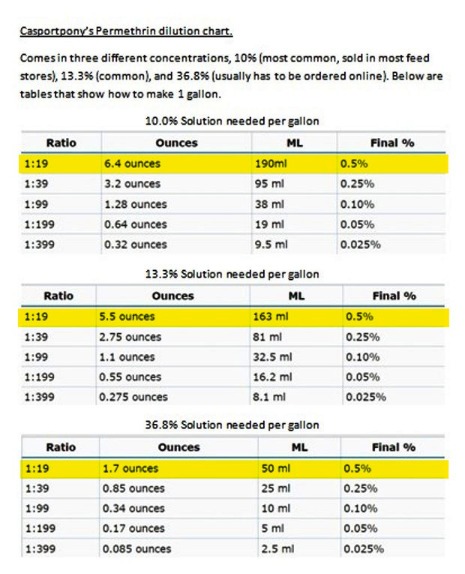
Here’s a mixture chart made by a friend; the lines marked in yellow gave the best results. While there are other products out there, I’ve found permethrin to be both highly effective and much more affordable than many alternatives.
- ece342eb-15ec-4182-aa86-bb874aa1a20d.jpg (68.38 KiB) Viewed 33 times
Effective management of pests and diseases in chickens is crucial for maintaining a healthy flock. Regular monitoring and a clean environment are essential to prevent infestations and infections.
[b]Common Pests and Control Methods
Major Pests
Pest Type Description Control Methods[/b]
[b]Mites[/b] Small parasites that feed on skin and feathers Use approved insecticides; maintain cleanliness
[b]Lice[/b] Wingless insects that can cause irritation Apply insecticides; regular coop cleaning
[b]Flies[/b] Can spread diseases and create nuisances Implement sanitation measures; use traps and insecticides
[b]Litter Beetles[/b] Feed on poultry waste and can spread diseases Clean litter regularly; use insecticides
[b]Control Strategies[/b]
[b]Regular Monitoring:[/b] Check for signs of pests and diseases frequently.
[b][b]Sanitation: [/b][/b]Keep the coop clean to reduce pest breeding grounds.
[b]Insecticides: [/b]Use appropriate products for specific pests, following safety guidelines.
[b]Integrated Pest Management: [/b]Combine biological, mechanical, and chemical [b]methods for effective control.
Common Diseases and Prevention
Major Diseases
Disease Symptoms Prevention Methods[/b]
[b]Marek's Disease[/b] Paralysis, tumors, weight loss Vaccination at hatch; clean environment
[b]Coccidiosis[/b] Diarrhea, lethargy, pale combs Use medicated feed; keep coop dry
[b]Salmonella[/b] Gastrointestinal issues, fever Maintain hygiene; wash hands after handling
[b]Prevention Strategies[/b]
[b]Vaccination: [/b]Ensure chicks are vaccinated against common diseases.
[b]Hygiene: [/b]Regularly clean the coop and equipment to prevent disease spread.
[b]Veterinary Care:[/b] Consult a veterinarian for health checks and vaccinations.
Maintaining a proactive approach to pest and disease control will help ensure the health and productivity of your chicken flock.
I personally use [b]permethrin[/b] for mite control. Years ago, I dealt with a severe infestation in my coops. I started by giving the coops a thorough cleaning, then sprayed permethrin into every nook and cranny once a week for a month. This routine not only eliminated the mites as they hatched, but also got rid of any flies—a nice bonus! One major advantage of using permethrin is that there’s no egg withdrawal period, so you don’t have to worry about discarding eggs during treatment.
Here’s a mixture chart made by a friend; the lines marked in yellow gave the best results. While there are other products out there, I’ve found permethrin to be both highly effective and much more affordable than many alternatives.
[attachment=0]ece342eb-15ec-4182-aa86-bb874aa1a20d.jpg[/attachment]

 2027 Calendar photo contest and
  Forum Posting Challenge
 2027 Calendar photo contest and
  Forum Posting Challenge